
Your Pupils’ Quest is to Discover
What is the role of a faith leader who has been called by God?

How does God speak to people?

What is a vocation?

What sort of tasks do people do in response to being called by God?
It is recommended that this Quest is a minimum of 6 lessons..
World Faiths and World Views
Progressive Study
- Christianity – (God’s Big Story – Creation – Fall – PEOPLE OF GOD – Incarnation – Gospel – Salvation – KINGDOM OF GOD)
- Islam
- Judaism
The Aims of this Quest…
- To give children an opportunity to consider what it means to be called by God.
- To give children an opportunity to consider the responses people have made in the past and still do today when they hear a call from God.
- To explore the lives and roles of Faith Leaders who have been called by God today.
On this Quest your pupils will develop their skills of:
- investigation, expression, reflection, application, synthesis
Prior Learning
Pupils will have previously explored
- EYFS and KS1 pupils will have heard stories of the people in the Old Testament.
- Unit 2.5 pupils will know the titles of the people who lead in the places of worship.
Key Substantive Knowledge
A prophet is someone who receives messages from God and communicates them to others.
There are many prophets in the Old Testament called to do God’s work.
God speaks to people today and calls them to undertake special roles and task for him.
Daily life and role of faith leaders.
Key Vocab
prophet, Old Testament, ministry, ordination, vicar, priest, Imam, Rabbi
Signposts
Explore
Stories of Old Testament prophets. What prophets today would speak in favour of or speak out against.
Encounter
Exploring the role and daily lives of Faith Leaders. Interviewing clergy and/or those in ministry.
Experience
Investigating the lives of people in more recent history who have been called by God and responded.
Key Questions
Key questions to get you started and to ask along the way:
- What does it mean to be called by God?
- In what ways does God call people? How does God speak to people?
- What do the stories about these people teach us about God?
- How do these stories help us to understand Christian beliefs about God?
- What sort of tasks does God call people to do?
- How do pupils feel when they are asked to do something important?
- How do pupils feel when they are asked to do something they do not want to do?
- Who has been/or could be called by God?
- What is the role of a faith leader who has been called by God?
- What are the similarities and differences between the role and daily lives of faith leaders?
- What is their role in the community?
Prepare for the Quest
Contact and invite local faith leaders into school to talk about their calling and what they do to live out that calling.
- Share with pupils the key information and key equipment.
- Ask pupils the key questions.
- What do pupils already know and what do they want to find out?
- Discuss with pupils where and how they are going to find out the answers to the unit and key questions.
- Begin a Working Wall and start recording in your class RE Scrapbook.
- Look at artefacts and pictures that help to generate more interest, engagement and further questions.
Resources you will need:
Click here for the link to Sensory Stories and Widgits for this unit.
Download the Travel Guide and Questful Learning Journey.
The Travel Guide and Questful Learning Journey
The Travel Guide gives information and facts that will be useful throughout the Quest.
The Learning Journey is an assessment tool to be referred to and filled in as you go along or at the end of unit. It can be used by pupils individually, in groups or as a class.
Who is going with you on the Quest?
After considering the content and focus of the Unit and Key Questions, decide which of the expert characters are going to be the most useful to have with you on this Quest. It is likely that they will all go with you, but they won’t always have an equal part to play.

Godfrey the Theologian

Phil the Philosopher

Sally the Human Social Scientist
Which of the key questions do you want to ask each character?
Sort the questions according to the expertise of each character. The children can then use the skills of each character as they answer the questions throughout the unit.
Godfrey will help you with questions about the Old Testament prophets and how people of faith believe that people are spoken to by God.
Phil will help you with big questions about values, truth, commitments, meaning and belonging.
Sally will help you with questions about the impact of religion on peoples’ lives and how people of faith have responded to God’s call and lived very different and challenging lives.
Throughout the Quest
Make the connection between the Old Testament prophets and the prophets of Islam and Judaism.
Essentially the prophets in the Qur’an, Hebrew Bible and Christian Bible are the same people. If you have Muslim or Jewish children in your class then hopefully the children will naturally make the connections and share the similarities and differences of the stories of the prophets recorded in the Qur’an, Hebrew Bible and Bible with their classmates.
It is important, if possible, for the children to meet people from their community who have responded to God’s call, and work full time in ministry or missionary work.
The Quest Begins
Your Direction of Travel
Who or what is a prophet? – Old Testament prophets – Christians in history who have responded to a call from God – Faith leaders: Who are they and what do they do? Christianity.
First Pathway – Who were the Old Testament prophets?
Discuss
Ask the children to talk about the times when they are asked or called to do something.
What kind of things are they asked to do?
Who asks them to do things?
How do they feel when they are asked to do something important?
Record individually using this template.
How do they feel when they are asked to do something they do not want to do?
Have they ever been asked to do something that they felt they were not skilled enough to do? However, they did it because they trusted the person who asked them. Talk about feelings and reactions to these circumstances.
Record individually.
In the Old Testament God often asked people who felt they were not capable of the task to do things for him.
The prophets in the Old Testament were called by God.
God’s Big Story
The prophets were given the task of telling the people to change their lives and rebuild their relationship with God. This is part of God’s salvation plan following the Fall. God is trying to restore creation and speak to his people. The people are going in all different directions away from God and the prophets are trying to tell them and show them the way back to God.
What or who is a prophet? Look up the dictionary definition of prophet
Record individually on the Learning Journey.
The Old Testament prophets include: Moses, Elijah, Daniel, Jonah, Isaiah, Jeremiah, Micah, Amos and Ezekiel.
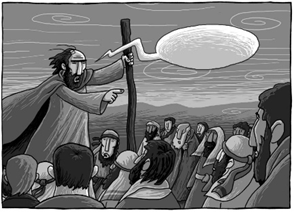
Use this picture of the prophet from the BDBE Advent, Christmas and Epiphany resources as a stimulus. He is giving a message from God to the people. I wonder what you think the message might be? I wonder what you think the message might be if he was speaking to people today?
Record individually using this download.
Milestone Marker
Pupils will be able to:
- tell you what they think God would be asking prophets to speak out against today.
Second Pathway – What did the Old Testament prophets do?
Give the children a choice of which Old Testament prophets they want to learn more about for example – Moses, Jonah, Isaiah, Jeremiah, Samuel or Elijah.
Read their stories and discuss what God asked these prophets to do, their reaction and then what they did.
Use ‘The Lion Storyteller Bible’ by Bob Hartman ISBN 978-0745949802.
Explore and Create
For stories that are chosen you could write diaries, letters, comic strips or book jackets.
Record individually.
Ask the children to think of questions they would like to ask the prophets.
Record individually on the Learning Journey.
Moses – God calls Moses from the Burning Bush (Exodus chapter 3). Watch this film clip from ‘Prince of Egypt’.
Jonah – Jonah who didn’t want to listen to God so he ran away.
There are some excellent pieces of art depicting the story of Jonah. These can easily found using a Google image search
Isaiah – In the book of Isaiah Chapter 1 we read about the incredible vision that Isaiah experienced.
Samuel heard God calling in the night when he was just a boy (1 Samuel 3).
Elijah stood up for God against the prophets of Baal (1 Kings 18:16-46). Watch this clip from, ‘Friends and Heroes’.
Reflect
What do the stories about these people teach us about God?
How do these stories help us to understand Christian beliefs about God?
Record individually on the Learning Journey.
Milestone Marker
Pupils will be able to:
- interpret the stories they explore and begin to understand why people of faith believe that they can be called by God.
Third Pathway – What are people called by God to do today? (2 lessons)
Impact
Introduce the children to the stories of people who have been called by God more recently than the prophets.
Investigate
Focus on how they were called by God and what they did for God. Factual books, collages and information displays could be made telling the stories of these people. Such as Mary Seacole, Adoniram Judson, Harriet Tubman, Mary Slessor, Eric Liddell, Isobel Kuhn, Corrie ten Boom, Betsey Stockton and Jonathan Goforth, there are many others.
Choose one or two whose story will fascinate the children. Connect their actions to Christian values.
Torchlighters are a very good resource. www.torchlighters.org for films and stories also the ‘Do Great Things for God’ series, a collection of children’s illustrated biographies published by The Good Book Company that highlights the inspiring lives of faithful Christian figures. Do Great Things For God | The Good Book Company.
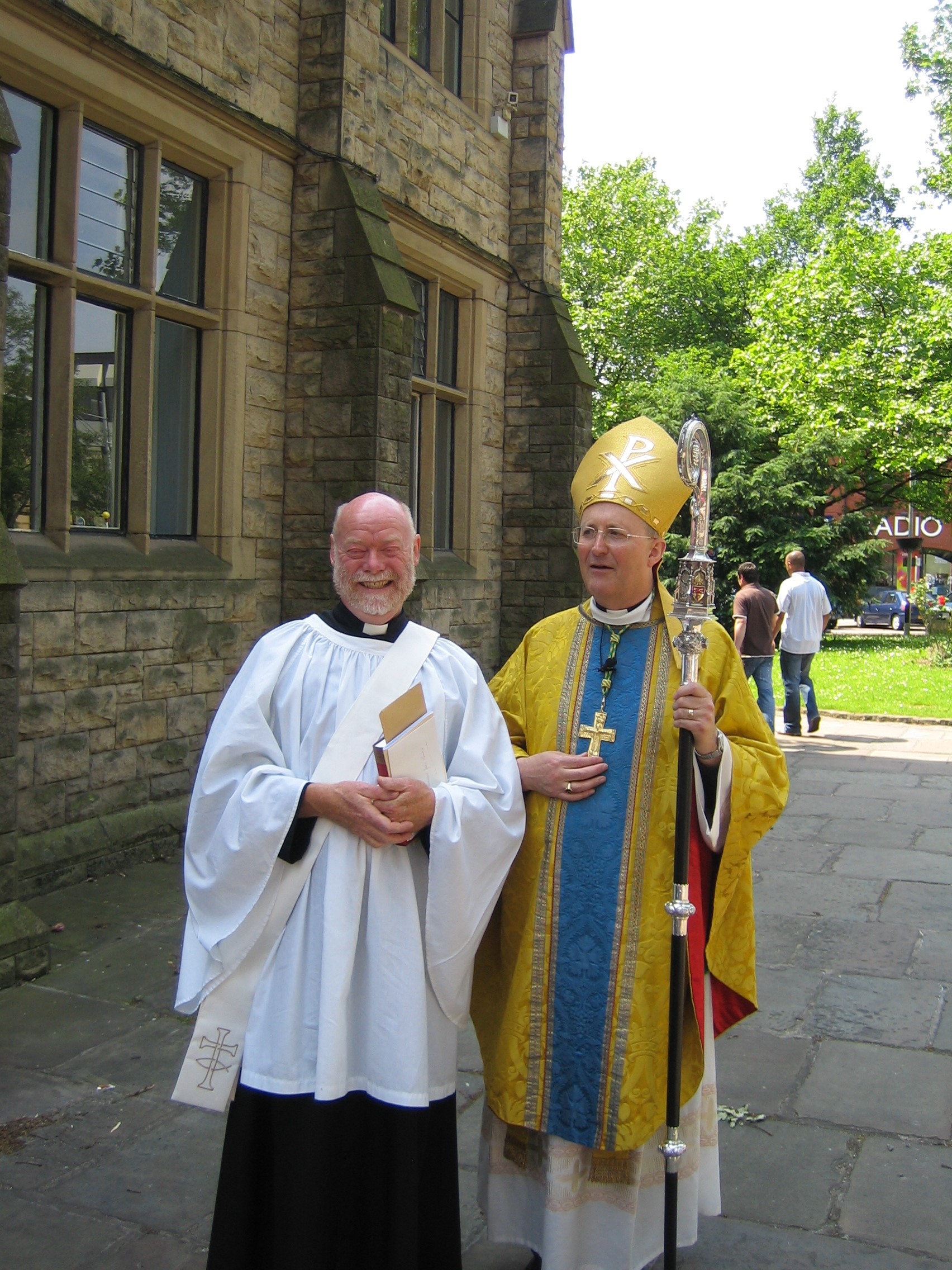
What job do these men do?
How do you know?
Why do they do these jobs?
Who chose them for this work?
John has just been ordained by the Bishop. What does that mean?
How does that make him different? Does that mean he has changed?
Who chose him to be ordained?
Investigate
Invite a member of the clergy and/or another Christian person working in fulltime ministry to visit your class.
The children can ask the visitor questions about their calling and how it changed and affects their lives.
Record on the Learning Journey.
Impact
On these websites you will find stories of people answering God’s call to missionary work overseas today. You will need to lift out stories and pictures to share with the children. It is important to mention these people and their work so that pupils understand that being called by God to do extraordinary tasks still happens to Christians today.
Church Mission Society (CMS) http://www.churchmissionsociety.org/
Baptist Missionary Society (BMS) http://www.bmsworldmission.org/
OM Ships International http://www.omships.org/
Mission Aviation Fellowship https://maf.org/
Milestone Marker
Pupils will be able to:
- describe the impact of responding to God’s call on a person’s life.
Pause at the Checkpoint.
Review – What have you discovered so far?
Reflect – Have you reached any of the Milestones yet?
Revise – What more do you need to find out? Where do you need to go next?
Refresh – Do you need any additional resources to move forward?
Record – Is your learning journey up to date?
At this Checkpoint identify the Th, Ph and HSS questions you have answered so far and what you are going to ask next.
The Quest Continues
Your Direction of Travel
Faith leaders: Who are they and what do they do? Judaism and Islam.
Fourth Pathway – What does a Rabbi do?
The Rabbi is the leader of the Synagogue and teacher of the congregation.
What does a Rabbi do?
What is their role in the community?
Investigate
As a class watch this video. Pause the film at different points and ask questions (see below).
What do the children find interesting?
Think About
Why do the people gathering with Rabbi David in the Synagogue for morning prayer eat breakfast after prayer rather than before?
Why does Rabbi David wear a Kippah?
What does he tell us about the symbolism of the knots in his prayer shawl?
Why does he wear the Tefillin on his head and arm?
Why are there 2 sinks in Rabbi David’s kitchen? – This will link to learning in Unit 3.5.
When and why does Rabbi David meet people?
Record on the Learning Journey.
Reflect
Rabbi David tells us that prayer and learning are equally important. Why? How is this reflected in the name Shul given to the Synagogue?
Discuss
Ask pupils to record individually why Rabbi David likens himself to a bridge and what that means to him. Do the children think that this is a good metaphor for his role as a Rabbi, why?
Milestone Marker
Pupils will be able to:
- describe aspects of the daily life of a faith leader.
Fifth Pathway – What is the role of the Imam?
The Imam is the leader of the mosque and teacher of the people.
As a class watch this video. Pause the film at different points and ask questions (see below).
What is the first thing that Naveed does in the morning? Why? (This connects to learning in Units 2.5 and 3.5)
Why does he say his prayers in Arabic?
Why does he have a beard and wear the style of clothes he wears?
What do the movements during prayers symbolise?
Discuss
Talk about the role of an Imam as described by Naveed. Ask pupils to record as individuals on the Learning Journey what they feel are the 4 most important aspects of Naveed’s role.
If possible, invite an Imam to visit your classroom and talk about their role and their daily lives.
How does what they do, compare to the daily life described by Naveed in the video?
Ask the pupils to review their ‘4 most important aspects of the role of an Iman’ in the light of further learning is there any they would like to change?
What did Naveed say he enjoyed most about being an Iman?
Record individually.
Reflect and Apply knowledge
In the video Naveed is speaking to the men gathered at the Mosque on a Friday. We can hear a couple of sentences from the Khutbah (sermon) that he is giving about success. The video moves on and we do not hear what he thinks success really is. Ask pupils to reflect on what Naveed said about his life in the video and what they already know about the teachings of Islam. What do the pupils think he might have said next?
Record a couple of ideas individually after discussion.
Evaluate
Together as a class make a list of what the children recognise as the similarities and differences between the role and work of a Vicar, Rabbi and Imam.
Record in your class RE Scrapbook.
Pupils will be able to:
- describe aspects of the daily life of a faith leader.
- identify similarities and differences between the roles of faith leaders and their calling.
- use religious vocab to suggest reasons why there are similarities and differences across religions.
Check in at the Final Checkpoint.
The Final Checkpoint
Conclude the Quest
Ask the children to imagine that if they were prophets today, what would they speak in favour of or speak out against? Would they give up everything for the cause? There may be an appropriate issue in current news that you could talk about, a local campaign, endangered species of animals or climate change issues.
Record individually.
WAGOLL (What a Good One Looks Like)
Information for Teachers
Description for this block. Use this space for describing your block. Any text will do. Description for this block. You can use this space for describing your block. Description for this block. Use this space for describing your block. Any text will do. Description for this block. You can use this space for describing your block.